The Data Operations Platform
Connect enterprise data. Build trusted operational foundations. Develop analytical applications. Orchestrate workflows. Govern every operational asset. Nexus unifies data integration, transformation, analytics, workflows, and governance into a single platform designed for organizations where operational decisions depend on trusted information. Instead of stitching together separate tools for data engineering, business intelligence, workflow automation, and operational monitoring, teams build and operate from one consistent platform. Everything shares the same operational foundation.
Developer Guide
1. Connect Your Data
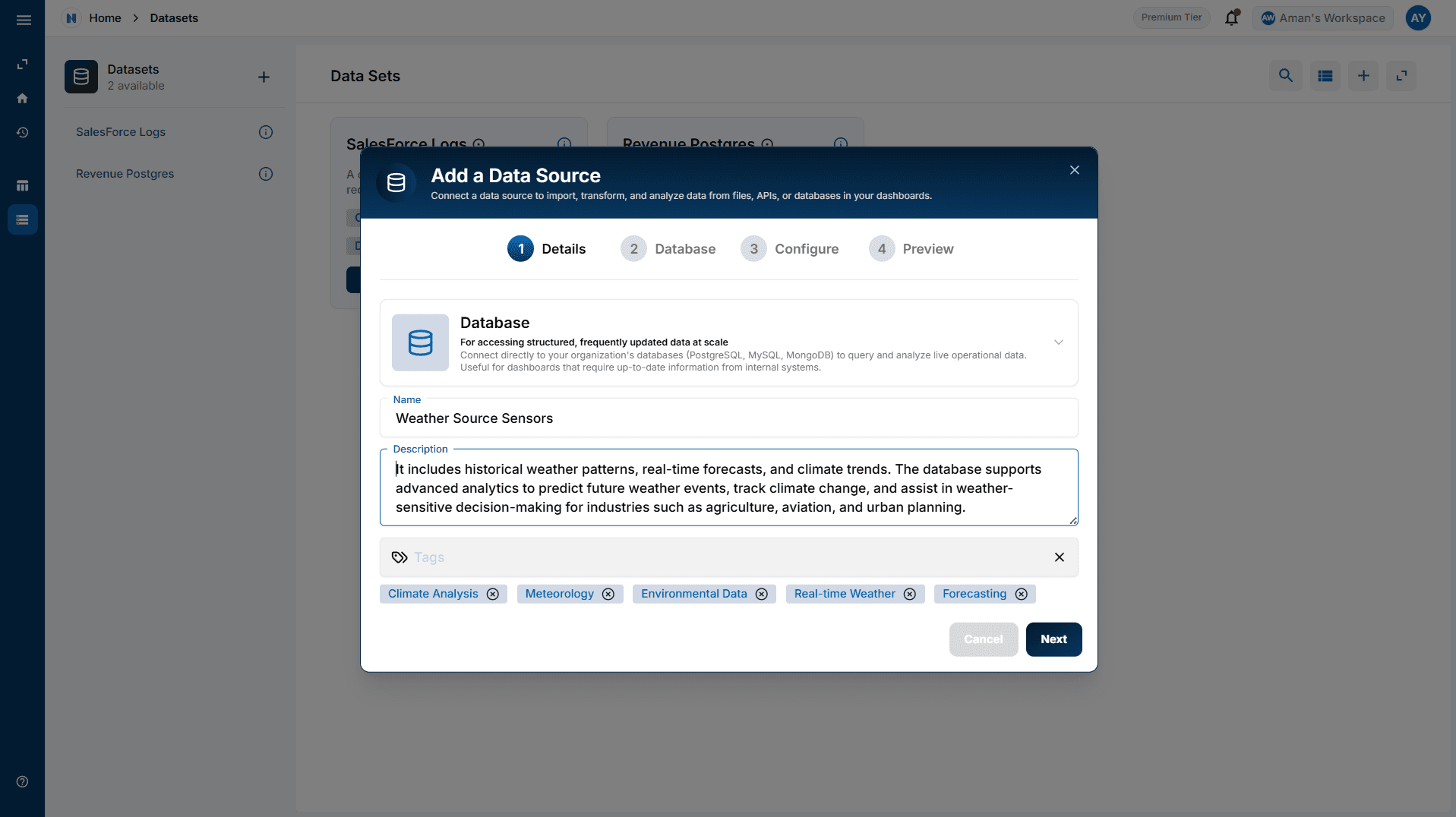
Start by creating a dataset — whether it's from a file, database, or API. Nexus auto-generates the necessary components such as a typed schema, sample rows, and column profiles to get you up and running quickly.

2. Build Transformations
Define your logic using Nexus's transformation engine. You can mix visual transformations, SQL, or logic nodes to create the desired data transformation and processing workflow.
3. Create Queries
Leverage the Unified Query Engine to extract the exact data structure needed for widgets or workflows, giving you flexibility in querying and organizing your data.
4. Build Widgets
Once your data is ready, create widgets by assigning data to them, configuring various layers (like data, format, axes, and interaction options), and previewing them instantly for quick iterations.
5. Assemble Dashboards
After building your widgets, place them into dashboards. You can enhance dashboards by adding filters, enabling interactions, and scheduling data refreshes to keep the information up-to-date.
6. Operationalize
Bring your work to life by setting up alerts, creating workflows, deploying logic, or embedding dashboards into other applications, allowing for seamless operation and real-time feedback.
7. Govern & Monitor
Ensure proper governance and monitoring by checking permissions, reviewing audit logs, tracking data lineage, and viewing transformation history to maintain data integrity and traceability.
Data Ingestion & Connectivity
Nexus connects to the systems that matter — securely, consistently, at scale.
- SQL databases (PostgreSQL, MySQL)
- NoSQL systems (MongoDB)
- REST APIs
- File-based ingestion (CSV, Excel)
- Schema auto-detection and typed sample rows
- Multi-sheet Excel parsing
- Advanced data profiling (null ratios, uniques)
Ingest via the UI. Define set transformation actions, apply typed schemas
Unified Query Engine
A single query abstraction across SQL, NoSQL, API, and file-based data. The Nexus Query Engine normalizes results into a consistent typed structure..
- Cross-source query compatibility
- Preview mode (1000-row sample window)
- Full-mode (server-side pagination)
- Drilldown queries
Developers define query configurations that the engine translates depending on source type (SQL, Mongo, REST API, etc.).
Workflow Engine
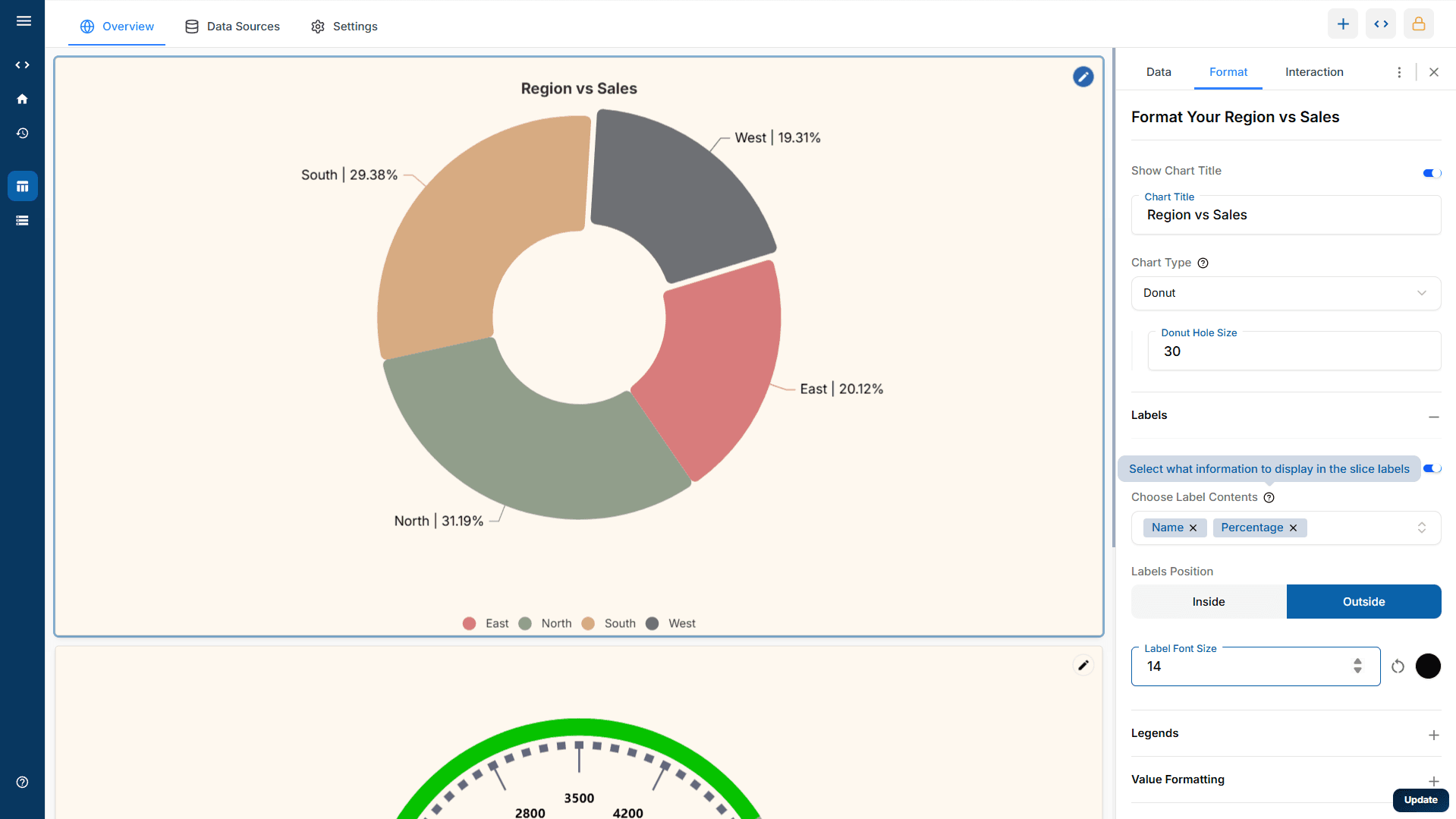
Data alone does not improve operations. Organizations create value when trusted information drives coordinated action. The Workflow Engine enables teams to orchestrate operational processes across data, systems, and people through governed, repeatable workflows. Rather than relying on disconnected approval chains, emails, or manual coordination, workflows become an integrated part of the operational platform. Data changes can trigger workflows automatically. Business rules can determine execution paths. Human approvals can be incorporated where judgment is required. Every execution is monitored, auditable, and repeatable.
- Visual Workflow Builder — Design operational workflows using reusable workflow nodes connected through an intuitive visual canvas.
- Data-Driven Triggers — Initiate workflows when datasets change, schedules execute, or operational conditions are met.
- Human-in-the-Loop Approvals — Introduce structured review, approval, assignment, and escalation steps for business processes that require human oversight.
- Business Logic — Route execution through conditional paths based on operational data and configurable rules.
- Workflow Monitoring — Track execution status, monitor running workflows, investigate failures, and review complete execution history.
- Reusable Components — Create workflow templates and reusable operational logic that can be shared across projects and teams.
- Data quality validation
- Incident response
- Operational approvals
- Maintenance coordination
- Customer onboarding
- Scheduled reporting
- Procurement processes
- Supply chain exception management
Developers define query configurations that the engine translates depending on source type (SQL, Mongo, REST API, etc.).
Widget Framework
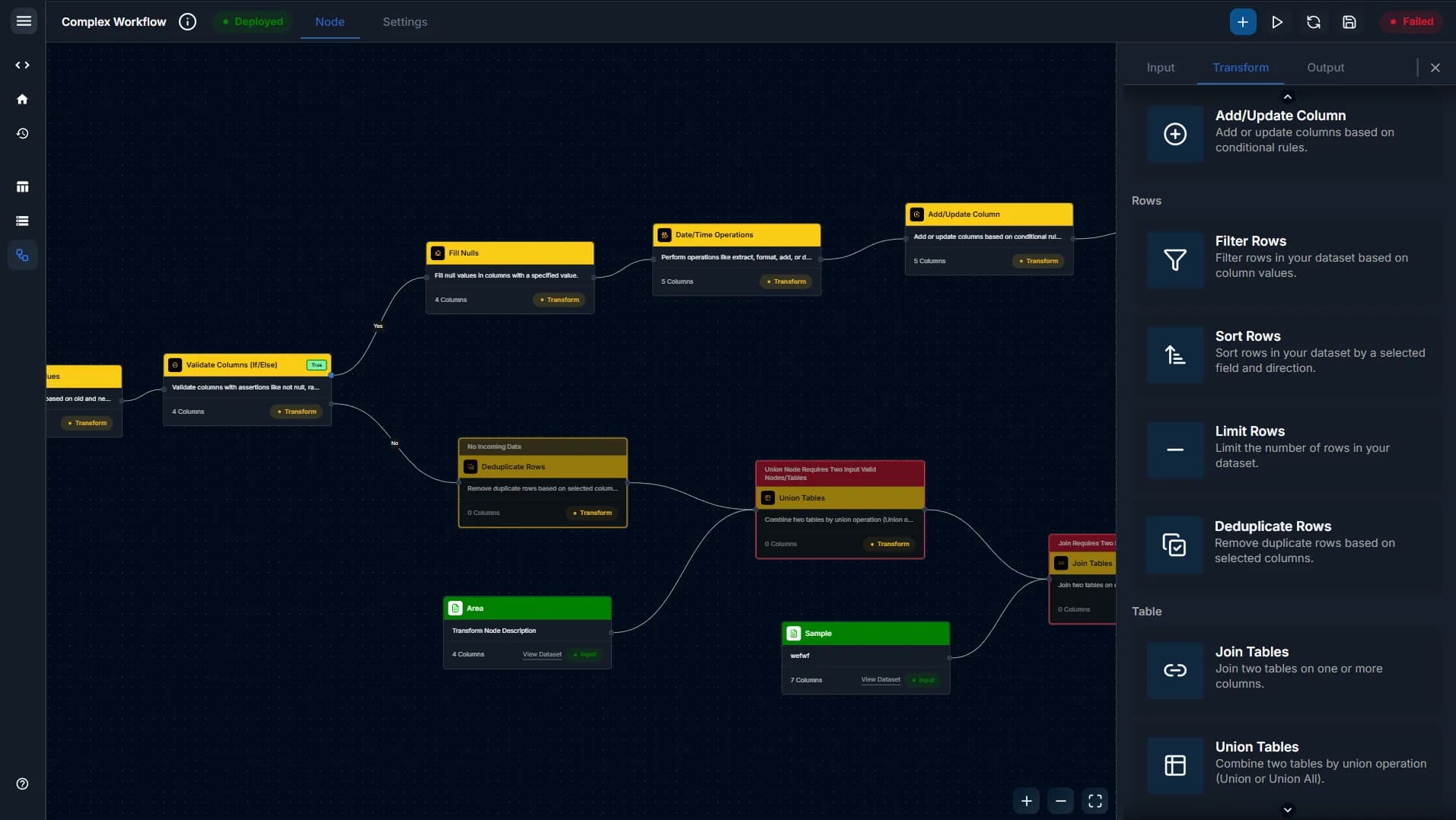
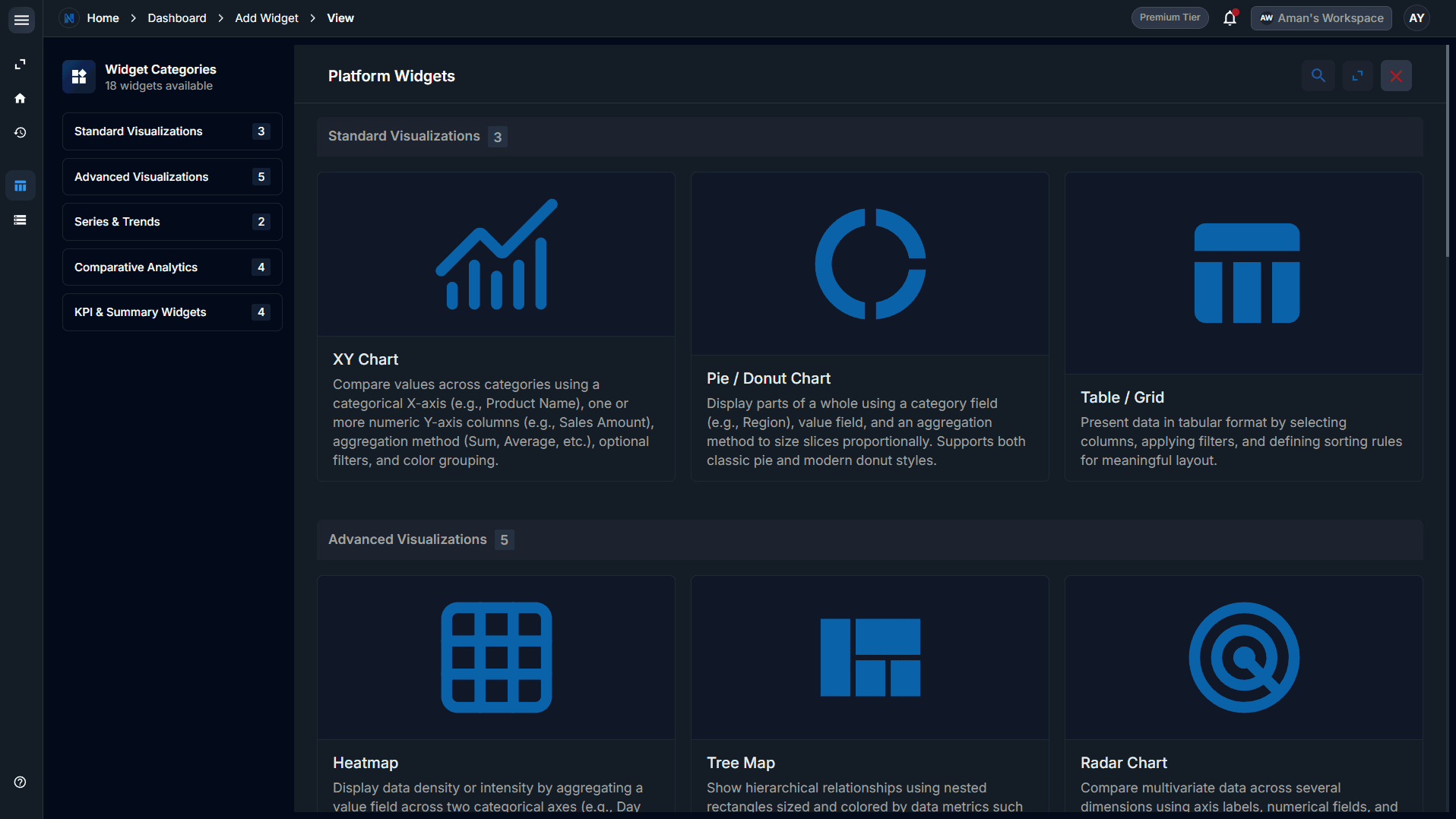
Your data becomes interactive, dynamic, embeddable visual components. Widgets in Nexus are structured as programmable, schema-aware visualization modules.
- XY charts (bar, line, area, scatter)
- Pie & donut charts
- KPIs & metric tiles
- Tables & grids
- Heatmaps
- Real-time tiles
- Data layer: query configuration, filters, aggregations, transformations
- Format layer: colors, labels, styles
- Axes layer: scales, domains, series, grouping
- Interaction layer: drilldowns, hover, tooltips, selection
Widgets can reference datasets, transformation results, or streaming endpoints.
Governance & Access Control
Built-in security, auditing, and permissioning. Nexus implements fine-grained governance across:
- Users, roles, groups
- Resource-level permissions (datasets, dashboards, widgets)
- Type-level permissions (view-all, discover-all)
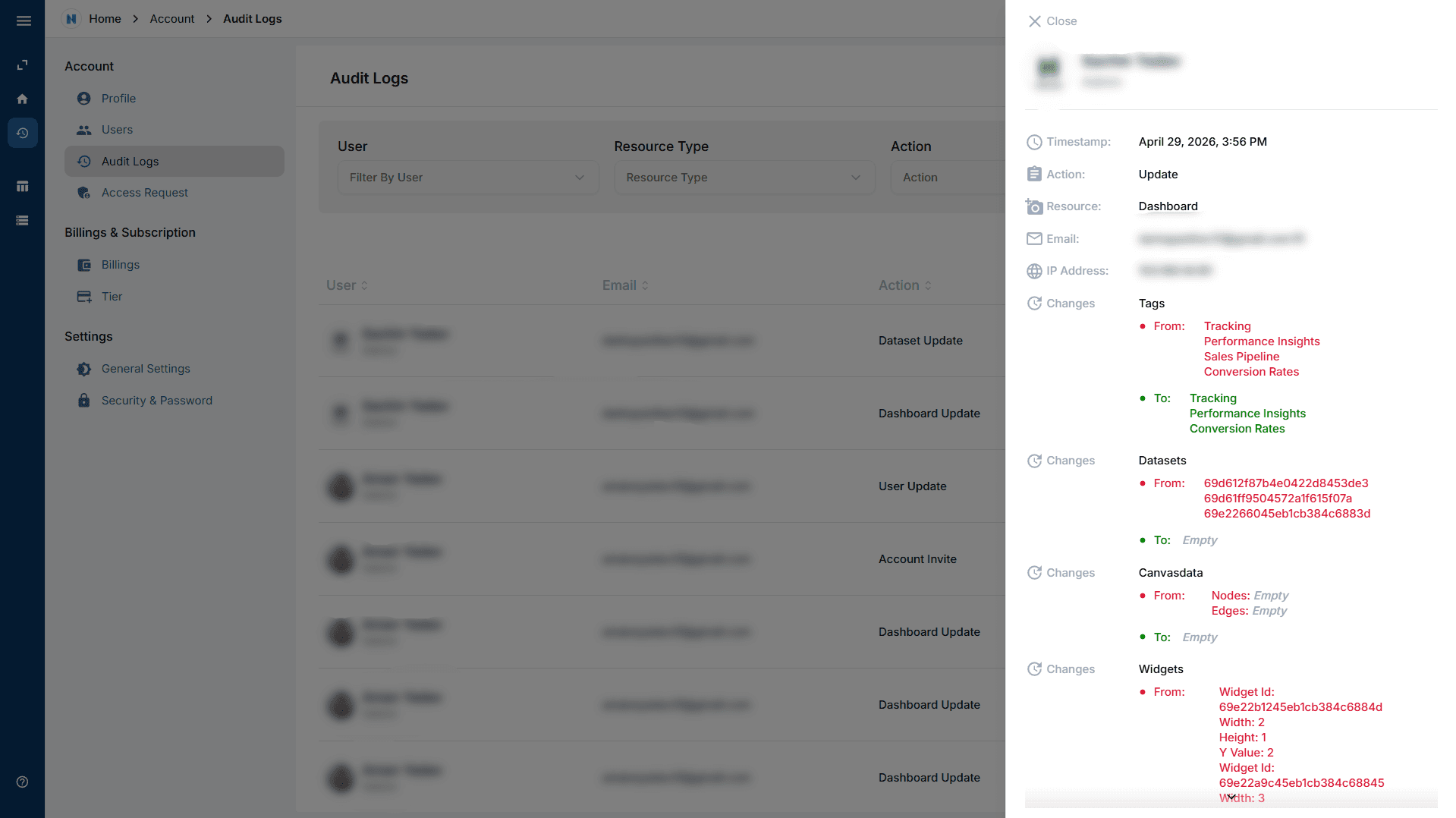
- Audit logging (create/update/delete events)
- Data retention policies
- Encryption at rest and in transit
- Export controls & secure sharing
- SSO for enterprise tiers
Every action is logged. Every permission is explicit.
What You Can Build
Everything is modular. Everything is typed. Everything is convergent.
- Intelligent BI dashboards
- Operational control centers
- IoT command boards
- Predictive maintenance interfaces
- Real-time logistics and supply chain monitors
- SaaS product analytics
- Embedded analytics for customers
- Workflow automation dashboards
- Full digital twins for enterprise systems
Nexus: The Developer Platform Built for Convergence
Nexus brings together ingestion, modeling, transformation, visualization, and operational activation — all in one coherent system.
Your data teams, engineering teams, and business teams now build in the same place. This is what a true Nexus feels like.